BySonu
168.0.5 Router Configuration Guide
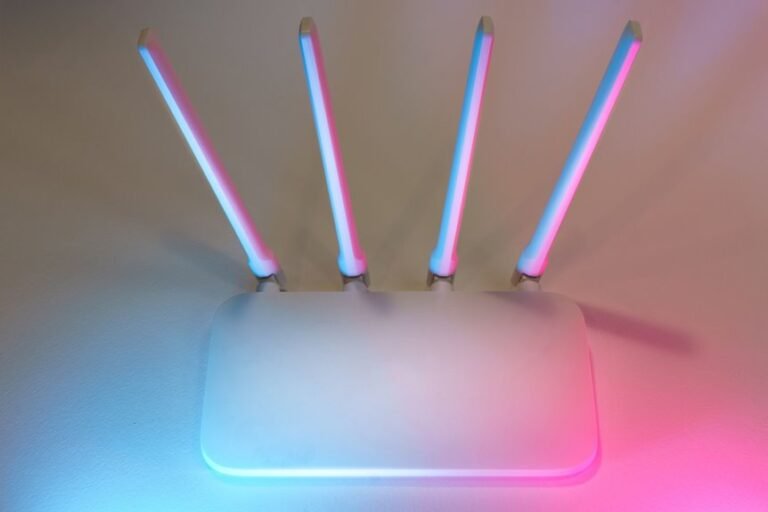
The 168.0.5 Router Configuration Guide presents a concise, steps-first framework for securing small networks. It begins with admin access to the default gateway and proceeds through a disciplined setup of SSID, encryption, and firmware checks. The guide emphasizes a hardened firewall posture, robust credentials, MFA, and guest isolation. Troubleshooting favors reproducible, deterministic diagnostics and rapid validation. The discussion ends with a prompt to apply these controls in practice, while a critical gap remains to be addressed before full policy enforcement.
How to Log Into the 168.0.5 Router Admin Panel
To log into the 168.0.5 router admin panel, the user directs a web browser to the router’s default gateway IP address, typically 192.168.0.1 or 192.168.1.1, or to a documented alternative in the device’s manual.
The login tutorial emphasizes precise credential entry, session establishment, and secure access; admin panel navigation follows standardized, jargon-heavy procedures for efficient configuration.
Quick Setup: Wi‑Fi, Security, and Basic Network Basics
The quick setup procedure directly builds on the prior login steps by outlining concise configuration steps for Wi‑Fi, security, and core network basics.
The guidance emphasizes stable SSID and channel selection, minimal short range interference considerations, and baseline encryption.
It prescribes a firmware update check, prudent firewall defaults, and essential LAN settings, with deterministic, repeatable, freedom‑oriented procedures.
Protect Your Network: Firewall, Password, and Guest Access Tweaks
Guarding the network begins with a disciplined firewall posture, followed by robust credential policies and controlled guest access. The analysis emphasizes static rule sets, intrusion profiling, and segmented zones. Policy enforcement remains centralized, while password hygiene and MFA reduce exposure. Guest networks receive isolation, captive portals, and access duration limits. Two word, two word.
Troubleshooting Common Issues and Quick Fixes
Configured router environments often reveal anomalies once the prior firewall and credential controls are in place, prompting a focused examination of common faults and their expedient remedies. Troubleshooting focuses on quantifiable metrics, repeatable steps, and deterministic diagnostics, eschewing extraneous interpretation. In practice, unrelated topic and irrelevant guidance are deprioritized, ensuring succinct, reproducible fixes, disciplined rollback paths, and verifiable post-fix validation for network resilience and freedom.
Frequently Asked Questions
How Do I Reset My Router to Factory Defaults?
Factory defaults can be restored by following the reset procedure: locate the recessed reset button, depress for ten seconds with a pointed tool, wait for LED indicators to flash, then reconfigure settings. This procedure ensures a clean reset and configuration freedom.
Can I Update Firmware Without an Internet Connection?
Firmware offline is feasible but hampered; devices can update locally via downloaded firmware, USB, or UART recovery. Two word discussion ideas: firmware offline. A meticulous procedure follows: verify hash, stage image, boot into recovery, apply, verify signature, reboot. Hyperbole: staggering efficiency.
How Do I Port Forward for a Specific Game?
Port forwarding for a specific game is performed by mapping the game’s external port to the device’s internal IP, ensuring UDP/TCP ranges align; this optimizes gaming performance while preserving network freedom and minimizing collateral port exposure.
What Is the Optimal Channel for Interference-Free Wi‑Fi?
The statistic shows 2.4 GHz channels overlap by up to 20% on crowded floors, prompting careful planning. The optimal channel minimizes interference mitigation, employing channel utilization metrics, spectral analysis, and beacon timing to sustain stable, high-throughput wireless performance.
How Can I Monitor Data Usage per Device?
The system monitors bandwidth by aggregating per-device data from router analytics, presenting device graphs for real-time and historical trends; it enables precise, methodical tracking while preserving user autonomy and freedom in network management decisions.
Conclusion
In conclusion, the 168.0.5 router configuration guide delivers a precise, methodical protocol for secure home networking. Following the logon sequence, users implement a stable SSID, channel optimization, and baseline encryption, then verify firmware integrity and firewall posture. Credential policies, MFA where possible, and guest isolation are enforced to minimize risk. Troubleshooting hinges on deterministic diagnostics and reproducible fixes, with rapid post-fix validation. As with a vintage chronometer, meticulous alignment yields resilient segmentation—an anachronism that still persuades today.